
Quick answer: You can learn the basics of pottery in Fort Kochi in a 2-day beginner program at a small studio in Mattancherry. Day 1 covers ceramic hand-building, guided time at the pottery wheel and simple decoration. Day 2 moves to terracotta and building your own living terrarium. Six sessions of about an hour each, up to 8 people, all materials included, ₹5,500 per person.
Most people who try pottery for the first time say the same thing afterwards: they did not check their phone once.
Clay does not allow it. Your hands are wet, the wheel is turning, and the moment you look away the shape collapses. For an hour or two, the clay is the only thing you can think about. That is the appeal.
Can complete beginners do pottery?
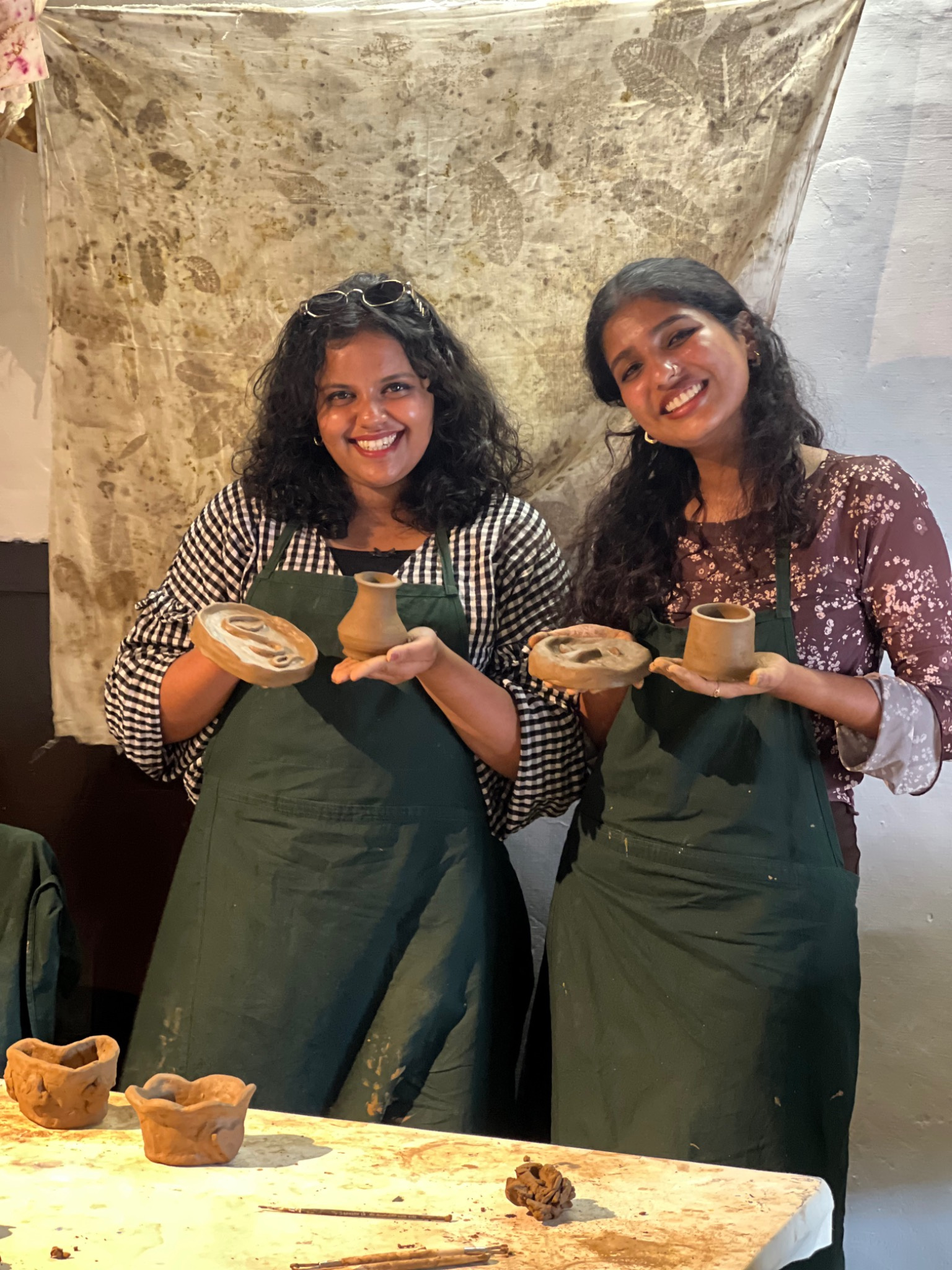
Yes. Beginner pottery starts with the simplest ways of shaping clay by hand, then introduces the wheel with a guide beside you. Nobody expects a perfect bowl on day one. Your first wheel pieces will probably be lopsided, and that is part of learning.
What you can expect after two days is a real feel for the material: how wet clay should be, how it responds to pressure, why centring matters, and how a finished piece is fired.
What happens across the two days
| Session | Length | What you do |
| Day 1: Ceramic pottery | ||
| Clay foundations and hand-building | About 60 minutes | Prepare ceramic clay and shape it with pinch, coil or slab methods |
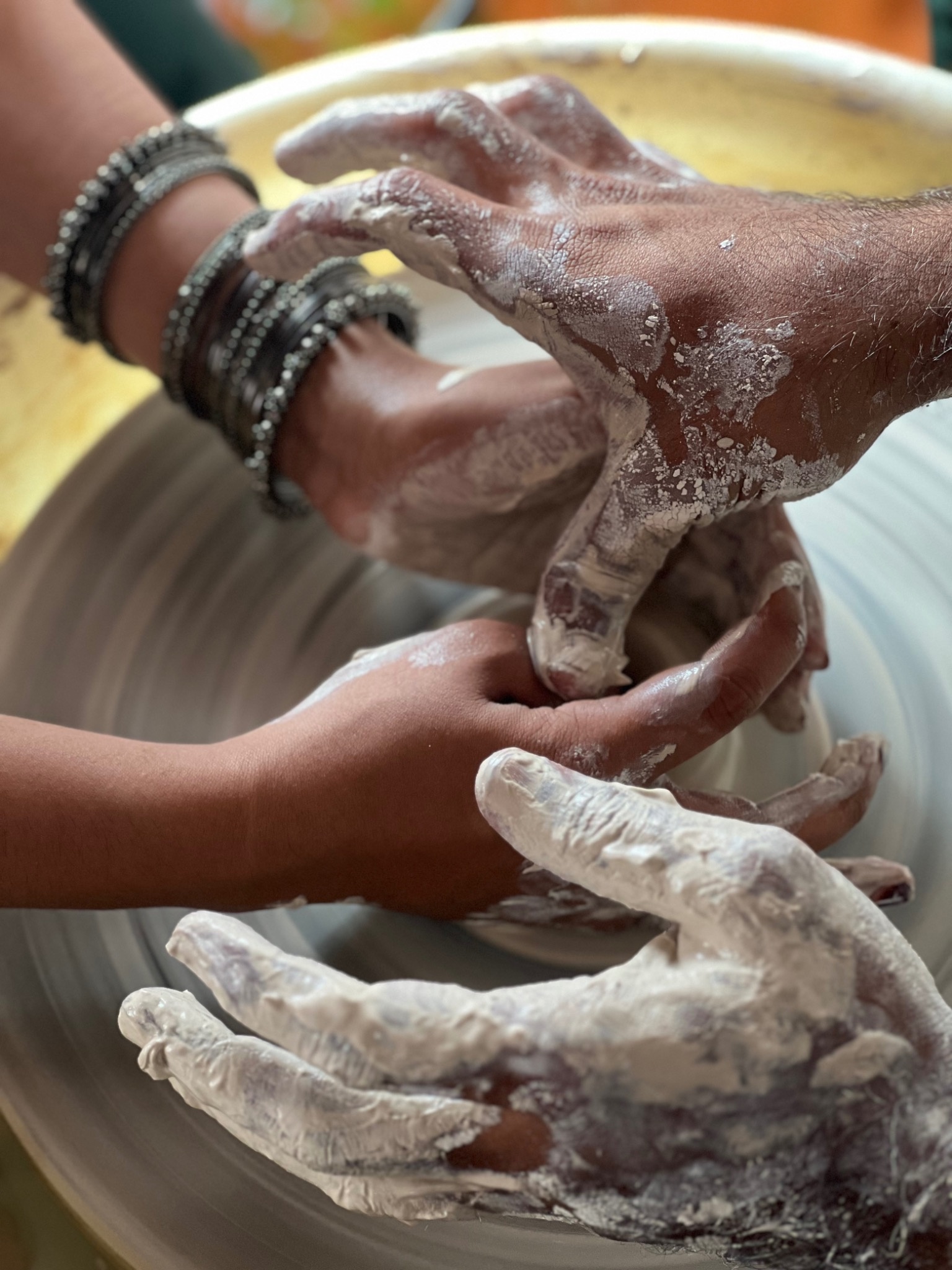
| Wheel practice and form | About 60 minutes | Learn centring, opening and shaping, with guided turns at the wheel |
| Refine, texture and decorate | About 60 minutes | Smooth your chosen piece, try surface textures and learn how firing works |
| Day 2: Terracotta and living terrarium | ||
| Terracotta by hand | About 65 minutes | Shape a small terracotta piece with beginner techniques |
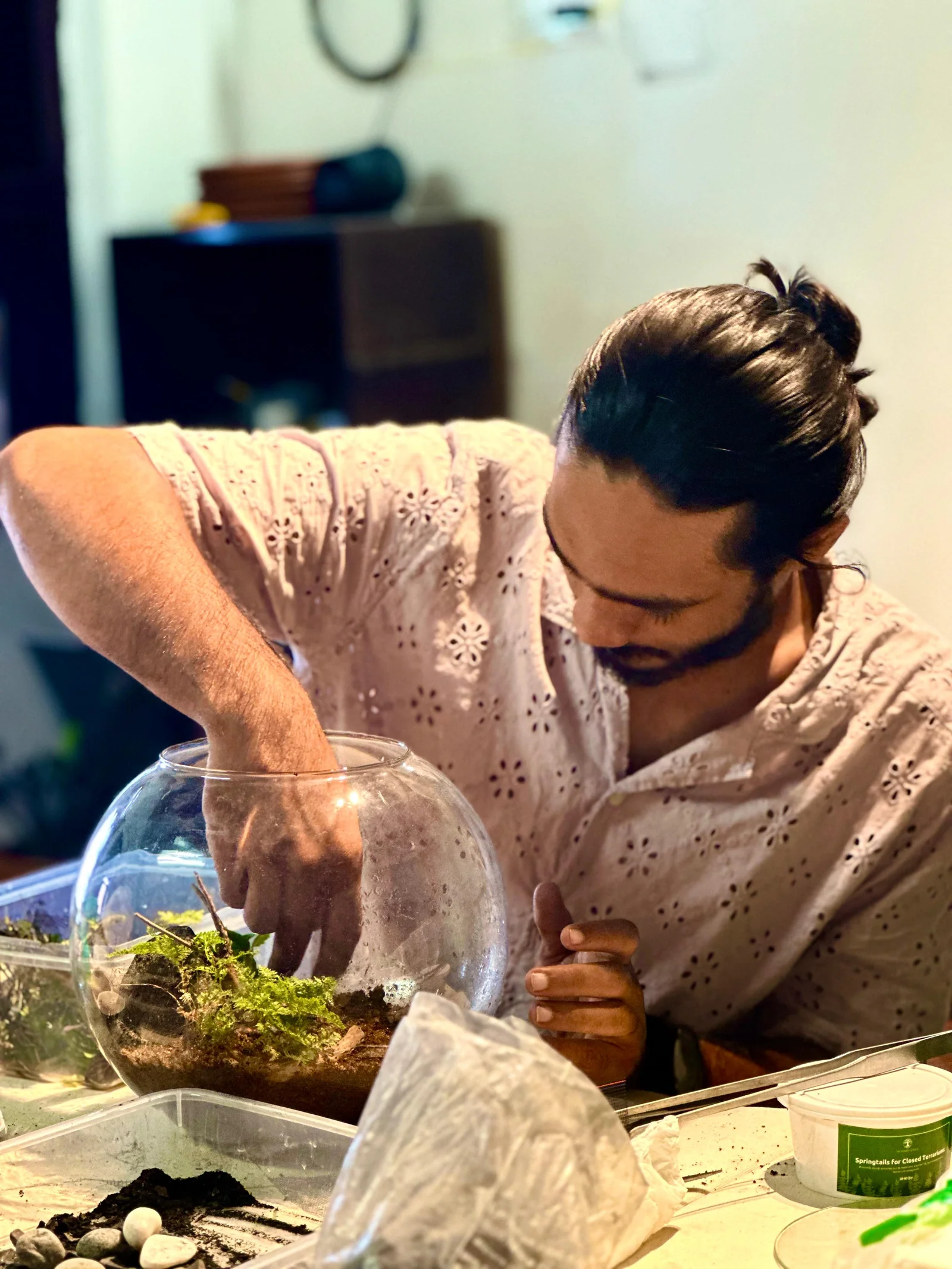
| Build your living terrarium | About 65 minutes | Layer drainage, charcoal, soil, plants and decoration in a glass vessel |
| Plant care and reflection | About 65 minutes | Learn to care for the terrarium and look back on what you made |
That is about six hours of hands-on making, split so you never feel rushed.
Hand-building or the wheel: what is the difference?
Hand-building means shaping clay with your hands and simple tools. Pinch pots, coils and slabs are the oldest pottery methods and the easiest place to start.
The wheel spins the clay while you shape it. It looks effortless in videos, but centring the clay takes practice. Having already worked by hand makes the wheel far less frustrating.
Terracotta is a reddish, earthy clay used across Kerala for pots and tiles. Working with it on day 2 shows you how different clays behave.
Why a terrarium?
A terrarium is a small planted garden inside a glass container. Building one brings living plants into the same unhurried process: layering, placing, adjusting. It is also the one thing you can carry home on the day, since ceramic pieces need drying and firing before they are finished.
Why clay helps people switch off
Pottery asks for full, physical attention. Your hands are busy, mistakes are visible straight away, and progress happens at the speed of the material. Psychologists describe this kind of absorbed state, where a task holds your attention completely, as flow.
There is some early research on making things by hand. A 2016 study led by Girija Kaimal at Drexel University measured cortisol, a hormone linked to stress, in 39 adults before and after 45 minutes of art-making, and found it was lower in about three quarters of them. It was one small study with no comparison group, and it does not mean any workshop will have the same effect for you. But many people simply describe pottery as the calmest few hours of their week.
What to wear and bring
- Old clothes you do not mind getting clay on. An apron helps.
- Short nails make the wheel easier.
- Tie back long hair.
- Nothing else. All clay, tools, plants and terrarium materials are provided.
Who it suits
- Beginners and the curious. No experience needed.
- Couples and friends looking for something to do together in Kochi.
- Anyone who spends the day on a screen and wants to use their hands for a change.
- Visitors staying a few days in Fort Kochi or Mattancherry.
Prefer a single short session? Try the 2.5-hour botanical eco-printing workshop at the same studio.
The program on Lifed
2-Day Pottery and Terrarium Program in Fort Kochi
- Where: Mattancherry (Jew Town), Kochi, Kerala
- Length: 2 days, 6 sessions of about an hour each
- Price: ₹5,500 per person
- Group: up to 8, beginner level
- Includes: ceramic and terracotta clay, tools, wheel time, terrarium vessel, plants and materials, plant-care guidance, and your creations to take home or collect after firing
- Host: Plant Aura, a Lifed verified Healthmate. Sessions are led by Amal, a pottery, terracotta and terrarium facilitator
Frequently asked questions
Are there pottery classes in Fort Kochi for beginners?
Yes. Lifed lists a 2-day beginner pottery and terrarium program at a studio in Mattancherry, next to Fort Kochi. It covers hand-building, the wheel, terracotta and terrarium making.
How much does a pottery class in Kochi cost?
The 2-day pottery and terrarium program costs ₹5,500 per person, with all materials included.
Will I use a pottery wheel?
Yes. Day 1 includes guided practice at the wheel, after you have warmed up with hand-building.
Can I take my pottery home the same day?
Your terrarium, yes. Ceramic pieces need to dry and be fired, so the studio will explain how and when they can be collected or completed.
Is pottery good for stress?
Many people find it calming because it needs full attention and keeps your hands busy. Early research on art-making is promising but small, so think of it as a pleasant, absorbing break rather than a fix.
Can I come as a couple or with friends?
Yes. The program suits individuals, couples and small groups, with up to 8 people per session.
Comments (0)
Be the first to respond. Comments are read by the LIFED team.