
Quick answer: Botanical eco-printing transfers the natural pigments and shapes of real leaves and flowers onto fabric, using bundling, pressure and heat instead of synthetic dyes or printed designs. In Kochi, Lifed lists a beginner-friendly eco-printing workshop in Mattancherry's Jew Town: about 2.5 hours, all materials included, up to 8 people, and you take home your own printed piece. It costs ₹2,500 per person.
There is a moment in every eco-printing session when the fabric is unrolled. Nobody knows exactly what will be there. A fern might print sharp and dark. A petal might leave only a ghost. Every piece is different, because every leaf is.
That small surprise is a large part of why people love it.
What is botanical eco-printing?
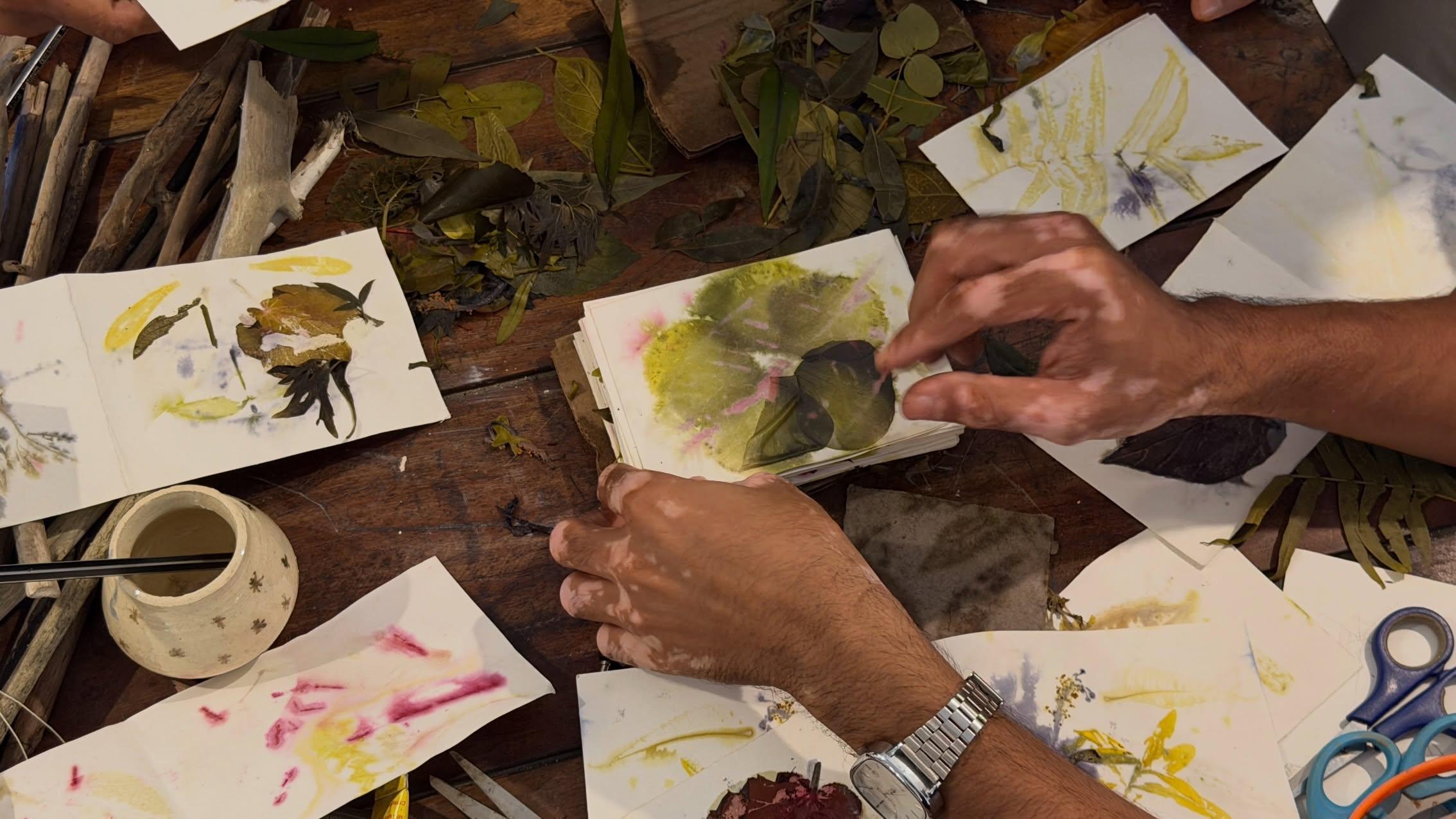
Eco-printing is a way of printing fabric with plants. Leaves, flowers and other plant material are laid on cloth, rolled or bundled tightly, and then steamed or heated. The colours and tannins in the plant move into the fibre and leave a print of its exact shape, veins and all.
The Australian artist India Flint developed the method on cloth in the 1990s, after noticing eucalyptus leaves leave a print on eggshells, and named it ecoprint. Today it is practised by textile artists, slow-fashion makers and hobbyists around the world.
What makes it a sustainable craft is the materials. The colour comes from the plants themselves, so there are no synthetic dyes or screen-printed designs, and much of what you print with can be gathered rather than bought.
How does it work?
You do not need to understand the chemistry to enjoy it, but it helps to know why results vary:
| What changes the print | Why |
| The plant | Leaves rich in tannins and natural pigments tend to print darker and sharper |
| The fabric | Natural fibres such as cotton and silk take colour differently |
| Pressure | Tighter bundles give crisper edges |
| Heat and time | Longer steaming usually gives deeper colour |
| Placement | Overlapping leaves create layers, gaps create negative space |
This is why the same leaf can print differently twice. Part of the craft is accepting that.
What happens in a beginner eco-printing workshop
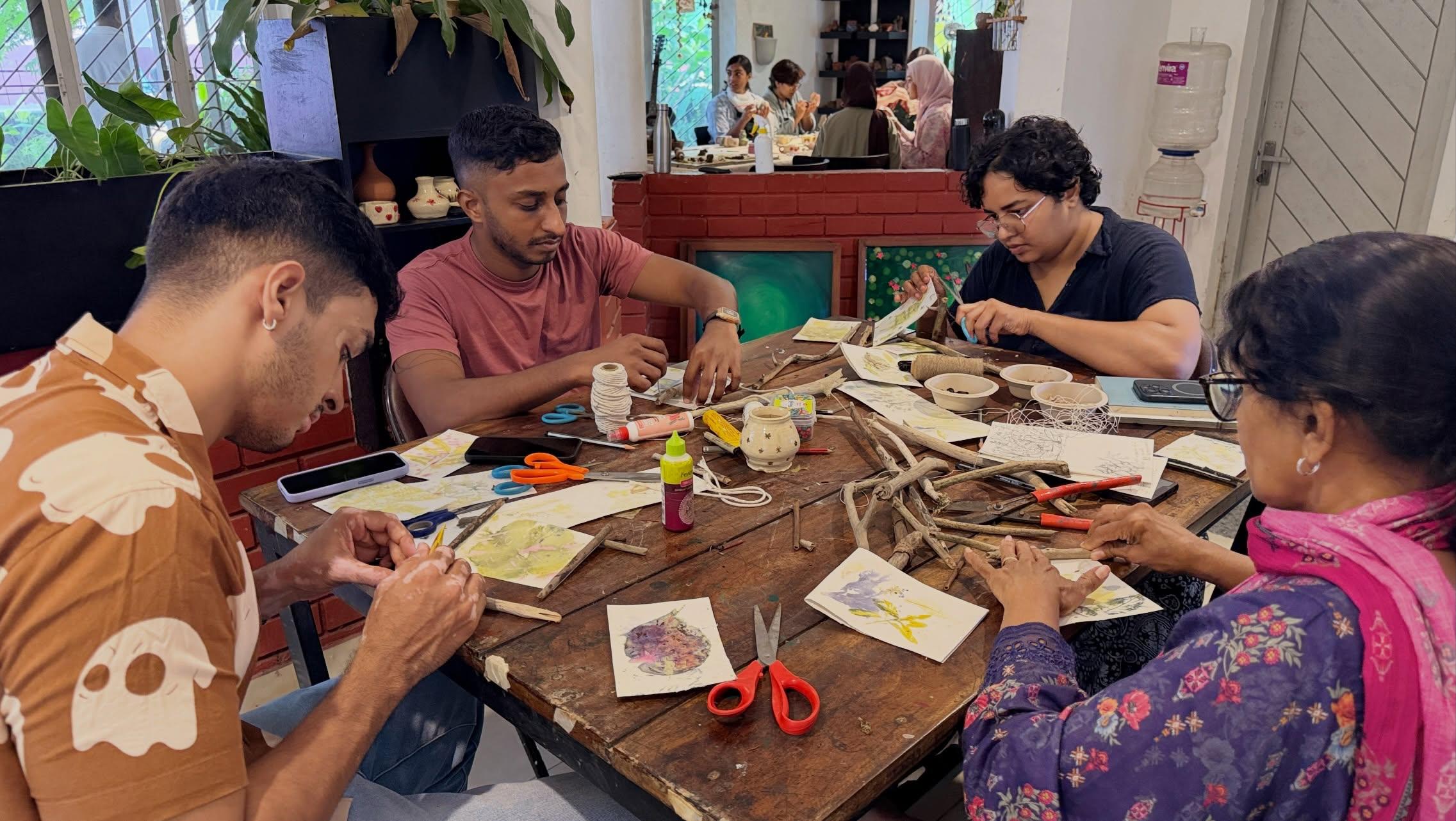
The Lifed workshop in Kochi is hosted by Plant Aura in a small studio in Mattancherry. It runs in three parts:
| Part | Length | What you do |
| Discovering nature's patterns | About 30 minutes | Meet the leaves, flowers and materials. Watch a demonstration of the basics |
| Creating your botanical print | About 90 minutes | Choose and arrange your plants on fabric and take part in the printing process, step by step |
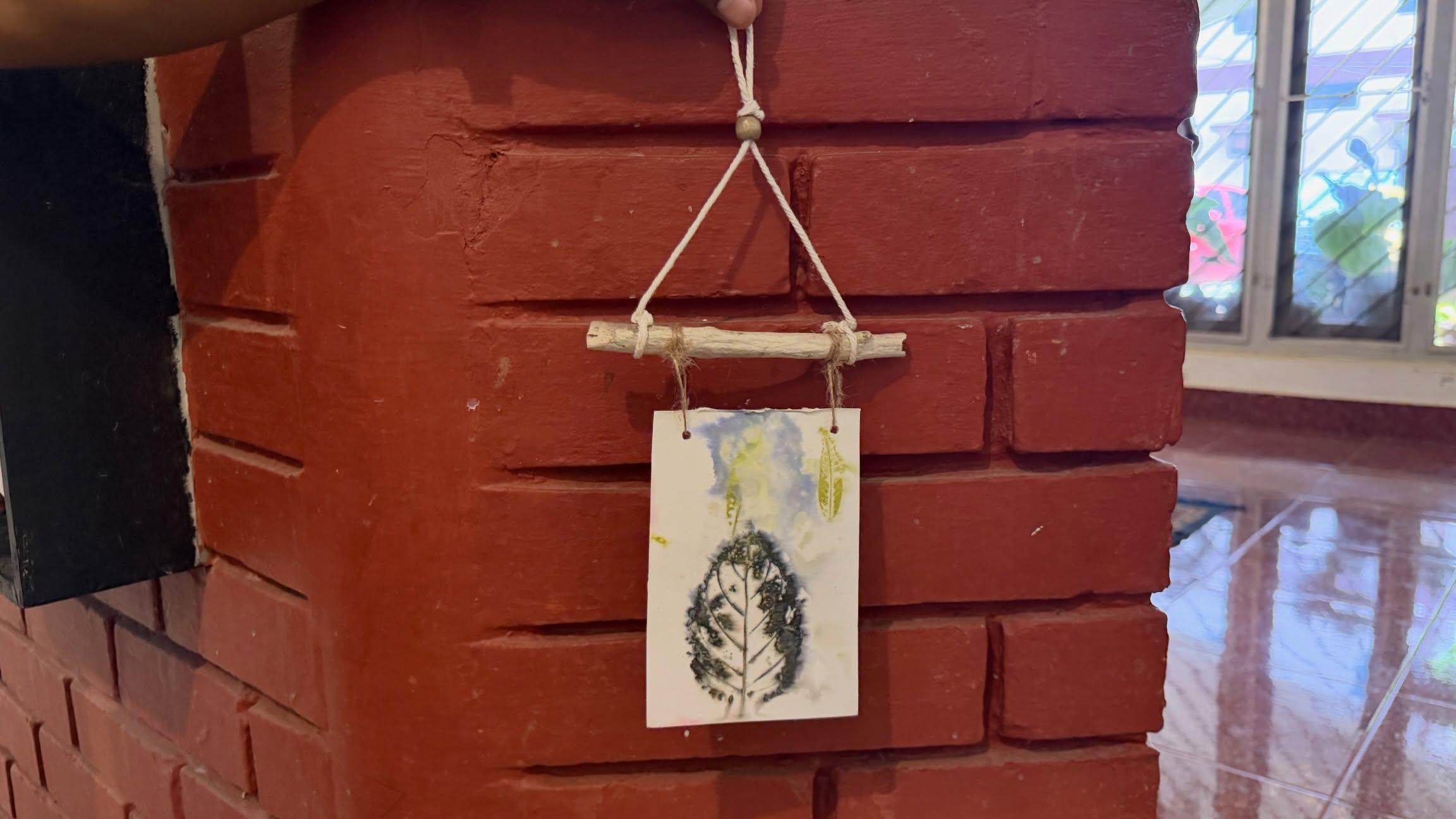
| The botanical reveal | About 30 minutes | Unroll your fabric, see what the plants have made and finish your piece |
All fabric, tools and plant materials are provided. You leave with one handcrafted eco-printed piece.
Why a slow craft feels good
Making something with your hands asks for a particular kind of attention. You cannot scroll while arranging leaves. You cannot rush the steaming. For a couple of hours your attention is held by texture, colour and shape instead of messages and decisions.
Eco-printing also removes the pressure to be good at it. There is no perfect design to copy. The plants do half the work, and the result is always a little unexpected. People who say they are "not creative" often enjoy it most for exactly that reason.
Who it suits
- Small groups of friends looking for something to do together in Fort Kochi and Mattancherry that is not another café.
- Teams and colleagues who want a relaxed, hands-on outing. Groups are capped at 8, so larger teams can book more than one session.
- Travellers who want a quiet, local creative afternoon between heritage walks.
- Complete beginners. No art or textile experience is needed. Participants should be 16 or older.
It is probably not for you if you want a formal textile course or a certificate. This is a single creative session, not training.
Why Mattancherry?
The studio sits in Mattancherry's historic Jew Town, one of Kochi's oldest craft and trading neighbourhoods, a few minutes from Fort Kochi. The streets outside are busy with antique shops and spice warehouses, which makes the slow, quiet work inside feel even more like a break.
Pair it with a walk through Jew Town or, if you want to spend more time with clay, the 2-day pottery and terrarium program from the same studio.
The program on Lifed
1-Day Botanical Eco-Printing Workshop in Kochi
- Where: Mattancherry (Jew Town), Kochi, Kerala
- Length: about 2.5 hours in three parts
- Price: ₹2,500 per person
- Group: up to 8, beginner level, ages 16 and up
- Includes: plant materials, fabric, tools, guided instruction and one eco-printed piece to take home
- Host: Plant Aura, a Lifed verified Healthmate. Refreshments are not included
Pick a session and book the eco-printing workshop
Planning a longer stay? See where and how to book wellness programs in Kochi.
Frequently asked questions
What is eco-printing?
Eco-printing is a natural way of printing fabric with plants. Leaves and flowers are bundled tightly against the cloth and heated, and their natural colour and shape transfer onto the fibre.
Do I need any art experience?
No. The workshop is designed for complete beginners, and every step is demonstrated and guided. The plants do much of the design work.
How long is the eco-printing workshop in Kochi?
About two and a half hours: a 30-minute introduction, 90 minutes of hands-on printing and a 30-minute reveal and finishing.
What do I take home?
One handcrafted eco-printed fabric piece that you made yourself.
Is eco-printing sustainable?
It uses plant material for colour instead of synthetic dyes or printed designs, and much of what you print with can be gathered. That is why it is often described as a sustainable craft.
Can I book eco-printing for a team outing?
Yes. Each session takes up to 8 people, so it suits small teams and friend groups. Larger groups can book more than one session or ask the Lifed team on WhatsApp.
Where is the workshop?
In Mattancherry's Jew Town, Kochi. The exact studio address is shared after booking.
Comments (0)
Be the first to respond. Comments are read by the LIFED team.