


7 min read | Lifed Wellbeing
You created the problem. You also created the story around it that makes it harder to leave.
That is not a judgment. That is just how humans work. When something hurts, the mind does not sit with the hurt - it builds around it. An explanation. A narrative. A version of events in which you are still okay, still centred, still the one people are paying attention to. It is intelligent, actually. It is the mind protecting itself the only way it knows how.
The problem is not the protection. The problem is what happens when the protection outlives the original wound and starts doing damage of its own

The Imaginary Loop and Why It Feels So Real
Picture it. Something goes wrong. You do not process it. Instead, you build a version of yourself that is doing fine - better than fine, actually. You are the one holding things together. You are the one people notice. The loop runs. You feel centred inside it.
Then a small thing happens. Someone takes too long to reply. A colleague gets credit you expected. A plan shifts without your input. And the response that rises in you is far larger than the event deserves. Irritation that feels like anger. Withdrawal that feels like dignity. A restlessness you cannot name but carry everywhere.
This is the loop cracking under its own weight.
The more it cracks, the more you compensate. The lipstick gets darker - and here the lipstick is every performance, every deflection, every curated version of yourself you layer over the thing you have still not looked at directly. The gap between the person you are performing and the person you actually are keeps widening. And the energy required to maintain that gap comes from somewhere. It comes from your patience. Your sleep. Your body.
What the Body Is Recording While You Are Busy Performing
The body does not understand performance. It understands signals.
When the brain lives inside sustained self-doubt - the quiet, chronic kind that runs underneath a functioning life - it reads this as threat. The hypothalamic-pituitary-adrenal axis activates. Cortisol is released. In short, purposeful doses cortisol is useful. It sharpens focus, moves you through acute difficulty, then settles when the threat passes.
But when the threat is the internal narrative itself - the low-grade hum of feeling inferior, the exhaustion of performing, the constant monitoring of how you are being received - the threat does not pass. The cortisol does not settle. And sustained elevated cortisol does specific, documented, measurable things to the body: it drives systemic inflammation, degrades sleep quality, suppresses immune response, and builds the physiological foundation for cardiovascular disease, metabolic dysfunction, and autoimmune conditions.
A 2024 synthesis in Social Psychological and Personality Science drew from 40 meta-analyses, over 2,000 individual studies, and data from more than one million participants. The finding: self-esteem is robustly and consistently associated with physical health, mental health, and overall wellbeing outcomes, with an effect size of r = .31 that held across every demographic, every age group, and every measure applied.
A 16-year longitudinal study of 14,117 adults in Canada found that declining self-esteem predicted increases in chronic disease across the follow-up period - not the other way around. The internal erosion happened first. The physical consequences followed.
We unknowingly contribute to this every single day. Not dramatically. Incrementally. Through the choices that maintain the loop rather than interrupt it.

The Difference Between Self-Esteem and Self-Centredness
This distinction matters and it is rarely made clearly.
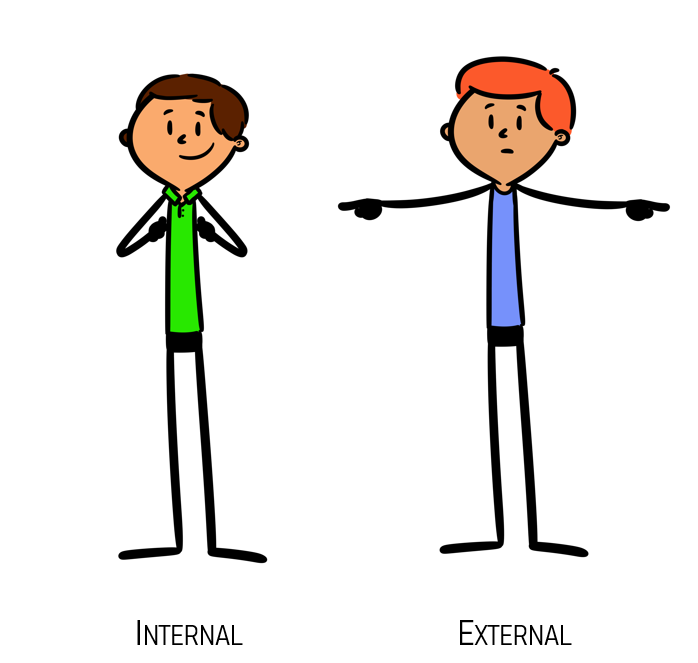
Self-centredness is outward-facing. It needs the environment to organise itself around the person - needs reactions, needs recognition, needs the room to acknowledge it. It is anxious by nature because everything it depends on is outside its own control. The moment the external feedback changes, the entire structure wobbles.
Self-esteem - genuine self-esteem, not the performed variety - is inward-facing. It does not need the room to move. It has a floor that is not contingent on what anyone else does today.
Research on locus of control - the degree to which a person believes their life is shaped by their own choices rather than external forces - shows consistently that an internal orientation predicts better health behaviours, lower rates of anxiety, greater persistence under challenge, and reduced chronic stress. Not because those people have more control over circumstances. Because they have more confidence in their own capacity to respond to circumstances.
This is what the engine becoming more efficient actually means. Not louder, not more impressive, not more visible to others. More efficient - less fuel wasted on maintaining appearances, more energy available for the actual work of living.
What Changes When You Start Acknowledging Growth
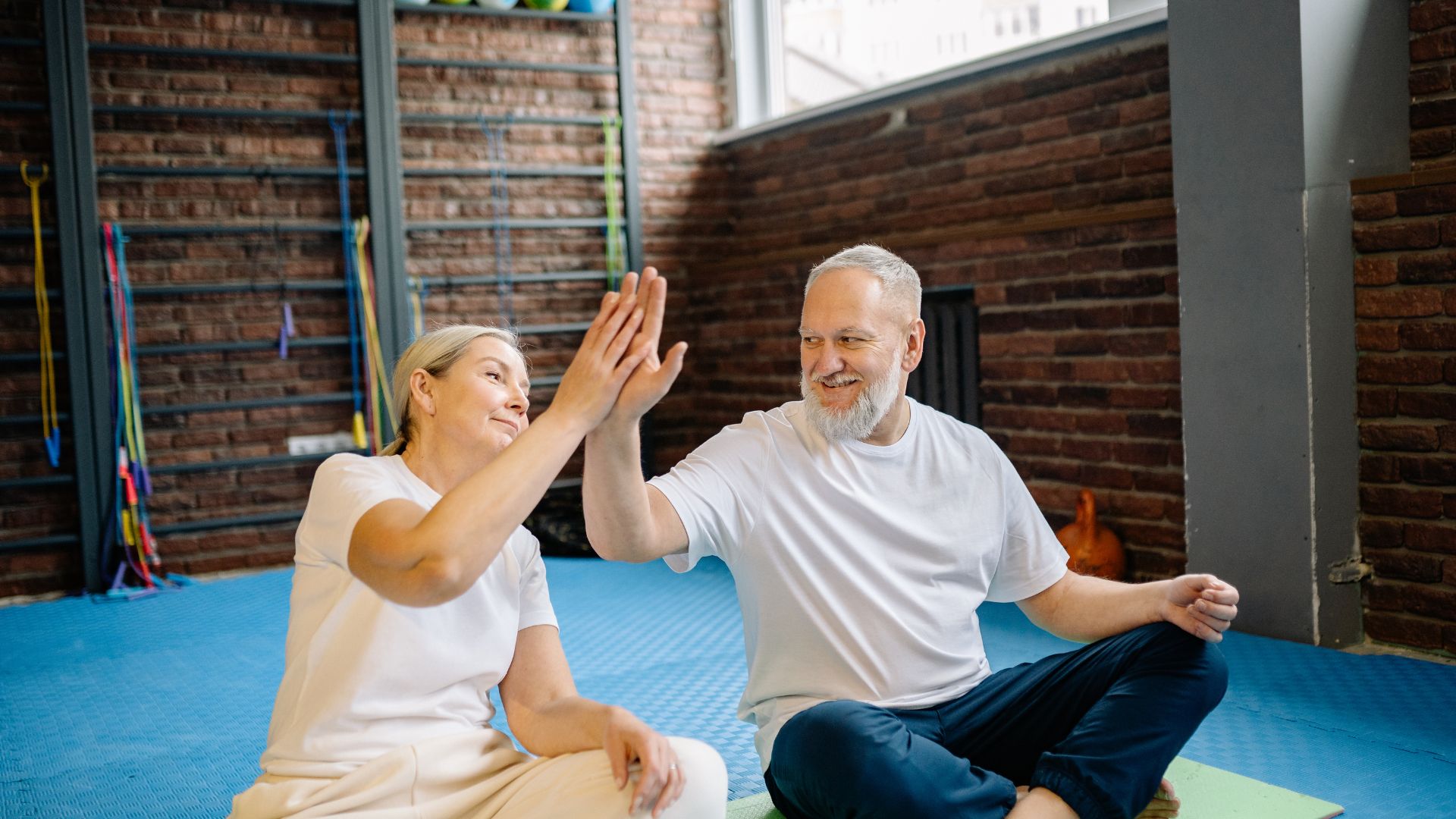
When the engine runs from self-respect rather than self-centredness, perception sharpens.
You begin to see genuineness around you - in people, in situations, in interactions - because you are no longer filtering everything through the question of how it reflects on you. You start differentiating your days not by whether they went well or badly, but by what you actually noticed, what you understood, what you chose to do. The days become distinct. The weeks stop blurring into each other. The life starts feeling specific rather than vague.
This is not a side effect of feeling better. It is a direct result of the cognitive bandwidth that becomes available when you stop spending it on the loop.

Confusion Is Healthy. Pretending Certainty Is Not.
This is the counterintuitive part most wellbeing content gets completely wrong.
Confusion - genuine not-knowing, sitting with a question you cannot yet answer - is a sign of contact with reality. It means you are looking at something true rather than at the comfortable version of it. It means the loop is not running.
Research published in PMC found that self-affirmation - the act of connecting with your actual values rather than performing an idealised self - measurably buffers the body's neuroendocrine stress response. Participants who completed self-affirmation exercises under conditions of social threat produced significantly lower cortisol outputs than control groups. The internal signal - knowing what you actually stand for, even imperfectly - quiets the alarm.
The person who can hold their own centre while everything around them remains uncertain is not someone who has eliminated confusion. They are someone who no longer needs to. Their conscience is under their own management. Their choices come from that place rather than from the noise of external reaction.
That quality - conscience under your own control - is not a personality trait you either have or do not have. It is a capacity that develops through practice. And it is, as the longitudinal data confirms, directly proportional to wellbeing across every measure researchers have applied.
That is also, not coincidentally, what leadership actually is.

Doing Is More Expensive Than Feeling. So Is Not Doing.
Empathy without action is a sustained physiological cost with no resolution.
The nervous system does not sharply distinguish between feeling distress and experiencing it. Research on chronic stress activation confirms that unresolved emotional processing - caring deeply, feeling deeply, without any corresponding action - keeps the HPA axis running in a state of alert. The body stays ready for something that never gets resolved. Eventually that readiness becomes the problem, not the original situation.
Taking action - even small, imperfect, preliminary action, starting with your own life before anyone else's - is how the nervous system learns that agency exists. And a nervous system with evidence of its own agency does not need to maintain permanent high alert.
Doing is not the absence of empathy. It is empathy with a direction.

The Practical Shape of Taking Control
None of this requires a transformation. It requires a shift in direction.
It starts with seeing the loop for what it is - not with shame, but with the specific clarity that comes from deciding you are done maintaining it.
It looks like choosing, in small moments across an ordinary day, to act from what is actually true about you rather than from what you hope others will believe.
It looks like sitting with confusion rather than papering over it with performance.
It looks like acknowledging the growth that is already there - the ways you have already changed, already moved, already handled things you were not sure you could - instead of measuring yourself only against the gap between where you are and where the loop told you you should be.
Each of these choices registers in the body. Cortisol settles. Inflammation reduces. Sleep improves incrementally. The smaller things stop requiring the reactions they used to require - not because life becomes easier, but because the person responding to it is running on self-respect rather than performance.
The engine is more efficient. The health outcomes follow.
Lifed: Not Guidance. Your Own Way of Living, Found.
Lifed is not a platform that tells you what your life should look like.
It does not hand you a formula and measure your compliance. It does not turn your wellbeing into a score and then sell you the solution. It does not guide you - because guidance implies someone else knows your route better than you do.
What Lifed does is build the conditions within which you find your own interesting way of living well. Through SMALL Habits - short, daily, science-backed practices that interrupt the loop without requiring you to overhaul everything at once. Through certified Healthmates who work with the specific person in front of them, not a demographic average. Through programmes mapped to where you actually are, not where a generic wellness framework assumes you should be.
The research is consistent: the most durable changes in physical health, mental health, and long-term wellbeing are not produced by interventions that prescribe values. They are produced by the moment a person decides - quietly, without announcement, without waiting to feel ready - that they are worth the effort of being honest about.
Lifed is built for everything that comes after that moment.
This is not a promise.
It is a process - and it begins entirely within your own control.
Your way of living well is specific to you. Lifed helps you find it.
Ready to build the internal signal?
Explore Programs Built by Certified Healthmates →


Comments (0)
Be the first to respond. Comments are read by the LIFED team.